
Dear Sam, you were kind of right.
And yes, AI will eventually replace most of what agencies have been doing for years. But it won't replace the 5% at the top, and it has a real fight on its hands for at least another 20% below that. If you know how to win that fight, you can build a whole business on the top quarter or so; it just looks different from the agency you run now.
This should not be a surprise on some level: AI is a disruptive technology.
In 2024, Sam Altman told the authors of AI First that AI would soon handle "95% of what marketers use agencies, strategists, and creative professionals for today." Easily, instantly, at almost no cost.
This May (2026), on a video link to a banking conference in Sydney, he said he'd been "pretty wrong." I had written several times that he was wrong. I'm also old enough to have been wrong about more technologies than most of my readers have used, so probably should've taken the win quietly.
I said that because when I started really digging into this, his number wasn't crazy. It was just the wrong way to count, and should've been explained better.
Will AI replace most agency services?
Most of them, yes. Or at least a lot of them. You're seeing the start of it already.
But it is also easy to imagine: take a year of work at a typical agency and sort it. By my rough count, about half is assembly: the drafting, building, producing and reporting that follows a pattern.
If you don't know the Judgment - Assembly distinction, you can read one of my takes on it in this article that also includes my commentary on Sam Altman's Mea Culpa.
Judgment comes in many forms, and a fair amount of it is routine, things like: which option, is it done, is it good enough. Add that routine judgment to the assembly and roughly 70% of the work sits squarely in the models' lane.
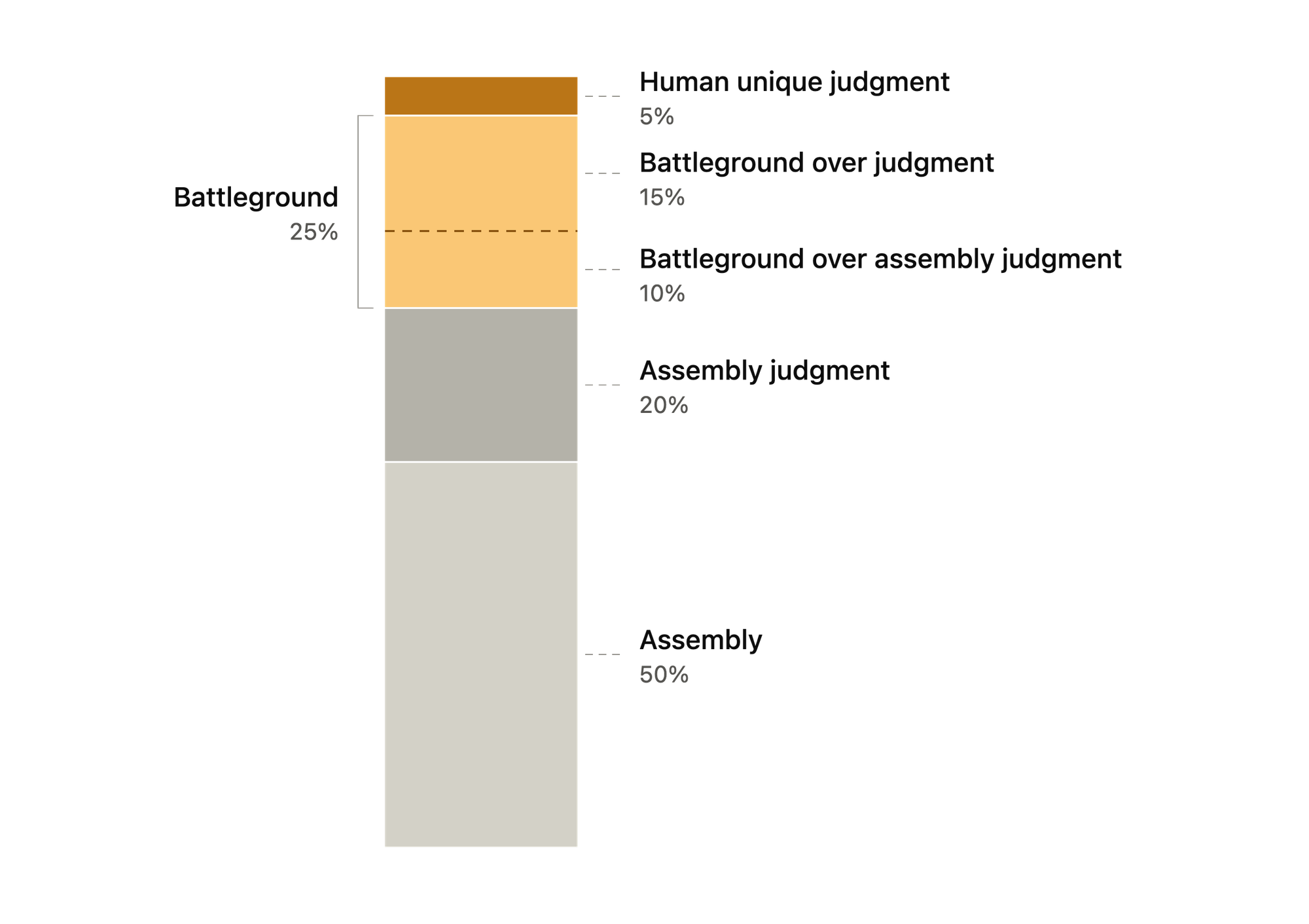
[FIGURE 1: Where agency work sits]
At the top sits a sliver the models can't touch: 5%. Between them is a battleground, a quarter of the work where the models produce something articulate enough that your client can't easily tell it from yours.
"Only 5% of my agency?"
Start there, because it's true. But don't stop there; the battleground is where agencies will win or lose the next few years.
Where the money sits
Say a client pays you $100,000 a year. About $50,000 pays for assembly, about $30,000 pays for judgment you billed as assembly, and about $20,000 pays for judgment you actually called judgment. (My rough numbers. Nobody measures this directly, which is part of the problem.)
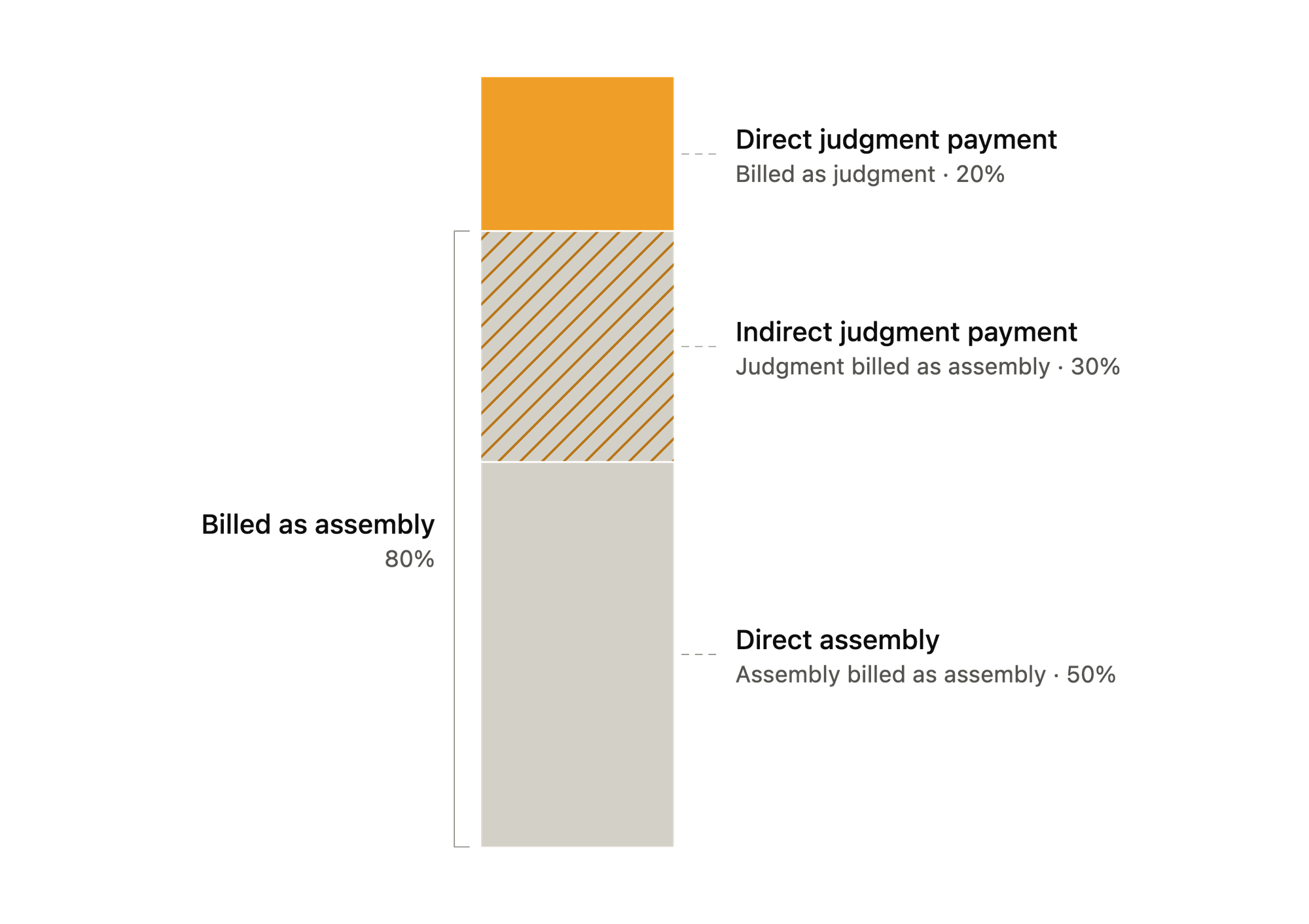
[FIGURE 2: How agency billing pays for judgment]
The $80,000 billed as assembly is the part your client will question when they ask, "Shouldn't this cost less now that you use AI?" Some of it should cost less. But $30,000 of it was judgment all along, riding inside the assembly where nobody could see it.
That's the money worth fighting for.
"Value" may be the most misunderstood word in this whole conversation, by agencies and by the consultants who write about them. I misunderstood it myself for years. That's its own article, and I'll get into it in the webinar (see below).
 Forgot Password?
 Forgot Password?
What's in the 5%
I think I know where Sam's 5% came from. The models can faithfully deliver what's been written down: every framework, best practice and case study your vertical has published. What they don't hold is the judgment that exists around your client; which problem they actually have, who has to be convinced, what failed last time, and why nobody mentions it. This is one of the many forms of judgment that are defensible, in this case I call it situated judgment.
Another type of judgment could be written down but just never was. Some of it can't be. Sit in a client's conference room and part of what you notice never makes it into words at all; you just know what the CMO said was not going to work...the why would come to you later, but you knew.
When I work with a client, my brain hears what they are asking for, but also reframes their ask against the lessons I have learned from working with 200+ other agencies. That's a form of situated judgment – you do it as well, I'm sure.
So a simple way to think of this is that there is codified and situated judgment. The 5% is situated judgment, the top 5% of judgment in any engagement. (You probably read the title as "the top 5% of agencies." Close enough. The top agencies will be the ones working the top of the judgment.)
The fight for the next 20%
The battleground, the area that you can claw back if you do it right is the zone where the models can produce a convincing version of your judgment.
Your client can't tell the difference by reading the deck, and if they can't tell, they won't pay for it. Call it the legibility problem: judgment the client can't see doesn't get valued, however good it is.
I would argue that this is AI at its most dangerous: counterfeit judgment. You may know it's wrong, but can your client see that?
You win it with depth that goes past anything written down, and with a client who experiences your judgment on their own problem instead of reading about it in a deliverable.
That combined 25% is also ground that is on the move. Problems and challenges that routunely get solved, all eventually get written up and absorbed by the models; David C. Baker said recently that being in the LLMs is hurting his business. (More on this here)
And the client moves as well. Solve their current problem and they have a new one, so the agency that keeps finding the next one compounds its lead, inside a relationship and across clients in the same vertical.
Good strategy consultants have run vertical practices this way for decades, and they charge two to three times what agencies do. A business built on the top quarter can work. It just looks different.
Isn't "sell strategy" what every agency already claims?
Every article says agencies survive AI by selling strategy instead of execution. Ask the AI engines that question skeptically and they fold: yes, "strategy" was mostly execution planning with a nicer name, given away to win the work that got billed. (You've seen plenty of those decks. Sure, some of them were even strategy.)
But relabeling the work won't win the fight. If your "strategy" could have been written for any client in your vertical, the models already have it.
Stay tuned to this channel for my upcoming piece on why today's Value Pricing is a complete fail. (partial-spoiler: relabeling the work as "products" or "magic" doesn't work.)
Should my agency niche down because of AI?
Ask Google's AI Mode and it will tell you to niche by workflow, not by vertical. That's backwards. A workflow is exactly the kind of thing that gets written down, turned into a playbook, and absorbed.
A vertical is different, if you go deep enough. Depth in one industry is one of the more powerful approaches that wins the battleground, and it's what gets you to the 5% beyond it: the problems nobody in your vertical has written down yet.
Which leads to the obvious question: "Okay, Jack. What should my agency look like?"
Different.
I work with leadership teams at agencies and project-driven organizations on exactly these kinds of structural challenges — the ones that make growth feel harder than it should. If what I'm describing here sounds familiar, I'd enjoy hearing about it.
— Jack Skeels


